

img 1663
Turtle Beach Stealth Pro 2 Review
There is a point where a gaming headset stops being something you casually throw into a backpack and starts behaving like a piece of serious audio equipment. At AU$549, the Turtle Beach Stealth Pro 2 is very firmly on the expensive side of that line.
That means excuses become harder to make. Plastic controls that feel like they came off a toy, mediocre microphones and software that needs three restarts before recognising the headset are much easier to forgive at $200. At $549, I want something that feels properly engineered.
The Stealth Pro 2 certainly makes the right first impression. Turtle Beach has overhauled the design, introduced new 60mm drivers, massively increased battery life, improved comfort and retained features including active noise cancellation, simultaneous Bluetooth and onboard EQ.
There are two main versions, one designed primarily around PC and PlayStation and another with Xbox support. Annoyingly, choosing between them isn’t quite as simple as buying the Xbox model because it technically supports more platforms. PC users need to pay attention to how game/chat mixing works, because the feature set differs depending on the version.
That’s an oddly complicated footnote for an otherwise extremely ambitious headset.
Still, once you get past some launch-software quirks, the Stealth Pro 2 looks like Turtle Beach making a proper attempt at the very top end of the gaming headset market rather than simply charging top-end money for another slightly shinier gaming headset.
Turtle Beach Stealth Pro 2 Review
The Turtle Beach Stealth Pro 2 is an ambitious flagship wireless gaming headset with excellent sound, impressive active noise cancellation, premium construction and a clever dual-battery system. It is expensive and there are still a few software quirks to sort out, but the underlying hardware is seriously good.
The Highlights
60mm Drivers
Powerful bass, clear vocals and excellent positional imaging give the Stealth Pro 2 impressive performance across games and music.
Dual 40-Hour Batteries
Two removable batteries provide up to 40 hours each, with the spare charging in the transmitter while the headset remains in use.
Active Noise Cancellation
Strong ANC cuts down background noise with very little audible hiss, while ambient mode sounds impressively natural.
Multi-Platform Support
PC, PlayStation and Xbox compatibility varies by model, while additional transmitters can be paired for easier switching between systems.
What We Like
- Excellent sound quality with powerful but controlled bass.
- Strong positional imaging makes it particularly good for competitive shooters.
- Premium aluminium construction feels properly high-end.
- Much more comfortable than the original Stealth Pro.
- Breathable memory-foam ear cushions suit long gaming sessions.
- Two swappable batteries provide up to 40 hours each.
- Spare battery charges directly inside the transmitter.
- Active noise cancellation is excellent with very little background hiss.
- Ambient mode sounds impressively natural.
- Simultaneous Bluetooth 5.3 with LDAC support.
- Separate Bluetooth volume control is genuinely useful.
- Clear detachable boom microphone with onboard noise reduction.
- 10-band EQ settings can be stored directly on the headset.
- Multiple transmitters can be paired for easier platform switching.
What Could Be Better
- AU$549 is a serious amount of money for any gaming headset.
- The differences between the PC and Xbox versions are unnecessarily confusing.
- PC game/chat mix cannot currently be adjusted directly from the headset.
- Game/chat mixing on PC requires the Waves audio driver and Swarm 2 software.
- Only one USB gaming source can be active at a time.
- Switching between transmitters is slightly slower than some rivals.
- The 10-band EQ is less flexible than the parametric EQ systems offered by some competitors.
- ANC can produce low-frequency rumbling when the earcup seal is disturbed on current firmware.
- Microphone sidetone stops working when ANC or ambient mode is enabled.
- No USB-C to USB-C cable is included.
Our Verdict
The Turtle Beach Stealth Pro 2 is one of the best headsets Turtle Beach has produced and finally feels like hardware built to justify flagship pricing. Excellent sound, strong ANC, genuinely premium construction, improved comfort and the excellent dual 40-hour battery system make it a very convincing package for serious gamers. The main frustrations come from the software side, particularly the awkward PC game/chat controls, confusing differences between versions and a few firmware-related ANC quirks. Those issues stop it from being flawless, but they do not change how impressive the core headset is. Once the software catches up with the hardware, there will be very little left to complain about.
Design / First Impressions
Turtle Beach has absolutely nailed the physical presentation.

The Stealth Pro 2 looks far more restrained than some of the company’s older gaming headsets. Instead of covering everything in aggressive angles, plastic panels and visual reminders that yes, you are definitely playing video games, the Pro 2 uses metal extensively and has a much more mature aesthetic.
The headband uses anodised aluminium, while the adjustment mechanism and metal control wheels give the whole thing a much more substantial feel. The earcups rotate and tilt properly, and the telescoping adjustment reportedly feels smooth rather than loose or notchy.
There is also a stretchy fabric section across the headband that works somewhat like a compact suspension system. I prefer this idea to the giant floating headbands found on some gaming headsets because it distributes pressure without making you look like you’ve installed a small bridge above your skull.

Turtle Beach has also reduced the clamping force compared with the previous Stealth Pro. Combined with softer, more breathable memory-foam ear pads, that should make a noticeable difference during longer sessions.
Glasses wearers haven’t been forgotten either. The pads are designed to remain compliant around the arms of your glasses rather than creating one concentrated pressure point behind your ears.
That’s important because premium build quality means very little if you’re desperate to rip the headset off after 40 minutes.
The earcups can also rotate flat when the headset is around your neck, and the offset design means the cushions sit relatively naturally against your shoulders. It’s the sort of tiny ergonomic detail that manufacturers occasionally overlook while spending six months deciding whether the RGB logo should pulse or breathe.

The microphone is removable and attaches securely. There’s also a proper hard carrying case included, although it sounds fairly chunky. Great if you’re travelling with enough luggage space, less exciting if you’re trying to squeeze everything into a small backpack.
Key Features / Specs
The headline feature list is extensive, as it probably needs to be at this price.
You get new 60mm drivers, Bluetooth 5.3 with LDAC support, simultaneous Bluetooth and wireless gaming audio, active noise cancellation, ambient mode and a 10-band onboard EQ.
There are also two removable rechargeable batteries. Each is rated for up to 40 hours, compared with 12 hours per battery on the previous Stealth Pro. That is a massive upgrade.

More importantly, the batteries are swappable. Keep one in the headset and another charged in the transmitter and battery anxiety effectively disappears. Long-term ownership should also be better because you aren’t automatically sentencing the entire headset to retirement when the internal lithium battery eventually degrades.

The base transmitter doubles as the charging dock for the spare battery, while additional USB-A transmitters can be paired with the headset. Up to four transmitters can apparently be associated with one headset, allowing someone with several gaming systems to switch between them using the QuickSwitch button.

That sounds excellent for the person whose desk resembles the electronics aisle at JB Hi-Fi.
Bluetooth audio gets its own volume control, separate from the primary gaming source, and the headset supports simultaneous Bluetooth. You could therefore remain connected to a phone while playing on PC or console without sacrificing the primary wireless connection.
Controls vary slightly between versions. The Xbox model gets game/chat balance functionality when used with Xbox, while the PC version has an assignable wheel. At launch, however, PC game/chat mixing requires the Waves audio driver and adjustments through Turtle Beach’s Swarm 2 software rather than direct headset control.

There is also a motion sensor. If the headset enters standby while sitting on your desk, picking it up can wake it automatically. It’s a small touch, but exactly the sort of small touch I expect expensive hardware to include.
Performance
Sound is one of the areas where the Stealth Pro 2 appears to earn its price.
Turtle Beach hasn’t completely reinvented the tuning from the original Stealth Pro. The character remains relatively bass-forward, with a deliberate reduction through part of the lower midrange designed to stop that bass from turning everything into thick audio soup.

The newer headset apparently shifts the balance slightly, with marginally less bass emphasis and a little more presence through the vocal region. The result should be a clearer presentation without throwing away the punchy signature that made the previous Stealth Pro popular.
The 60mm drivers also appear capable of handling serious low-frequency output. The supplied testing found that substantial bass boosts could be applied without immediately introducing obvious distortion.
That’s useful beyond simply turning explosions into small earthquakes around your ears. Strong driver control gives you more freedom when using EQ because the hardware isn’t falling apart the moment you ask it to produce more low-end energy.
FPS performance is similarly strong. The previous Stealth Pro was already particularly capable when it came to positional information, and the Pro 2 appears to retain that strength rather than dramatically changing it.
That matters more to me than any “competitive” audio mode that destroys half the soundtrack in the name of making footsteps louder. I still want games to sound good.
Turtle Beach does offer its Superhuman Hearing feature, including different modes intended to emphasise footsteps or gunfire. Turning it up aggressively reportedly cuts a substantial amount of bass and can make the overall presentation harsher, but using it at a lower intensity gives you another option for competitive shooters without completely murdering the audio mix.
Music performance also seems surprisingly strong for something built primarily for gaming.
Vocals are presented naturally, and while there is some upper-treble emphasis around the 8kHz region, it appears less aggressive than on several competing headsets. Anyone particularly sensitive to brighter treble can reduce that area slightly using the EQ.
The default tuning is already good enough that I wouldn’t immediately start dragging sliders around like an overexcited DJ. Use it first. Then change whatever actually bothers you.
What It’s Like to Use
This is where the Stealth Pro 2 becomes both impressive and slightly frustrating.
Swappable batteries are brilliant in normal use. One battery can live in the headset while the other sits in the charging base. When the first one eventually gets low, swap them and continue.
With up to 40 hours available from each battery, you’ll probably swap batteries less frequently than you expect anyway.
Switching between transmitters is also straightforward using the QuickSwitch control, although reconnecting reportedly takes slightly longer than comparable implementations from Astro/Logitech and SteelSeries. We’re talking about a small delay rather than something catastrophic, but the competition is extremely good at this stuff now.
The independent Bluetooth volume control is another feature I really like. Adjusting phone volume without interfering with your game’s audio level sounds basic, but it makes simultaneous Bluetooth genuinely useful rather than merely something printed on the box.
The Swarm 2 software gives you access to the 10-band EQ, microphone tuning, sidetone, noise gate, AI noise reduction, button assignments, ANC controls and battery behaviour.
Most of those settings can also be stored on the headset, which is particularly useful for console players who don’t want to keep returning to a PC every time they change something.
There are limitations.
The EQ system isn’t as sophisticated as the parametric EQ implementations available from some rivals, and Turtle Beach doesn’t currently have the same enormous community-generated preset ecosystem.
More irritating is PC game/chat mix. Being forced into software control on an expensive headset when competitors provide immediate physical adjustment feels unnecessarily awkward.
It’s exactly the sort of feature you don’t think about until somebody in Discord suddenly becomes 40 per cent louder than everyone else while your game decides to stage an artillery bombardment.
ANC performance, however, sounds excellent.
Background noise is heavily reduced without the obvious white-noise hiss that some ANC gaming headsets produce. That’s a significant achievement considering the Stealth Pro 2 also uses breathable fabric pads rather than sealing your ears inside synthetic leather.
There is an early firmware caveat. The supplied testing identified a very-low-frequency rumbling or bass-lift effect when ANC was enabled and the earcup seal was disturbed. Turtle Beach was already testing firmware intended to address this behaviour.
Ambient mode is another highlight. It reportedly sounds natural and immediate rather than making the outside world sound like it’s being transmitted through a security camera microphone.
The odd part is sidetone behaviour. Enabling ANC disables microphone sidetone, and ambient mode doesn’t restore it either. I understand the technical reasoning with ANC, but losing sidetone during ambient mode feels unnecessarily restrictive.
What I Liked
The build quality is the biggest surprise.
Turtle Beach has produced plenty of good gaming headsets over the years, but “luxurious construction” probably wasn’t the first phrase most people associated with the brand.
The Stealth Pro 2 changes that.

The combination of aluminium, properly damped controls, extensive articulation and the fabric headband gives it a physical quality that better matches the enormous price tag.
I also really like the battery system.
Replacing the original model’s 12-hour batteries with units rated for up to 40 hours completely changes how often you’ll need to think about charging. Add the charging dock and replaceable design and you’ve got one of those rare technology upgrades that’s useful rather than merely numerically impressive.

Sound quality appears equally convincing. Turtle Beach hasn’t chased perfectly neutral studio tuning, but it hasn’t simply dumped enormous bass over everything either. There’s plenty of impact without sacrificing the positional information that actually matters in games.
And the microphone deserves credit.

The boom mic produces clear, full-bodied speech, while the onboard noise reduction can reduce typical background sounds such as keyboard noise without sounding excessively processed.
Firmware updates have reportedly improved microphone performance further, so updating the headset through Swarm 2 should be one of the first things owners do.
What Could Be Better
For something this expensive, the platform situation is unnecessarily confusing.
The Xbox model has broader compatibility, but PC players who want proper PC game/chat functionality should look closely at the PC version instead. Even then, the physical game/chat control wasn’t available at launch.
That’s messy.
Someone spending $549 shouldn’t need a compatibility flowchart taped to their monitor before deciding which version to buy.
The transmitter system is also both clever and slightly stingy.
Being able to pair several transmitters and move quickly between platforms is useful, but only one primary USB source can be active at a time. Some competing premium systems offer multiple wired USB inputs from the same base station.
There also isn’t a USB-C-to-USB-C cable supplied for connecting directly to USB-C devices. You get a two-metre USB-A-to-C cable instead.
That’s hardly disastrous, but we’re discussing a $549 flagship headset in 2026. USB-C isn’t exactly experimental technology anymore.
Swarm 2 also trails some competitors in advanced EQ flexibility. The onboard 10-band equaliser is perfectly usable, especially because the default tuning is already good, but power users may miss full parametric adjustment.
Then there are the software quirks.
The ANC bass-rumble issue under an imperfect seal appears fixable through firmware, but it still isn’t ideal for a flagship product to launch with something noticeable enough to require an upcoming patch.
Modern technology has somehow convinced all of us that “it’ll be fixed in firmware” is a perfectly normal stage of product development.
Price and Competition
At $549, the Stealth Pro 2 is unquestionably expensive.
That puts it into competition with some genuinely serious gaming audio products rather than mainstream wireless headsets.
SteelSeries is major rival. The newer premium Arctis models offer excellent ANC, sophisticated software features and more flexible EQ options. Turtle Beach counters with what appears to be particularly strong comfort, excellent physical construction and that excellent swappable-battery arrangement.
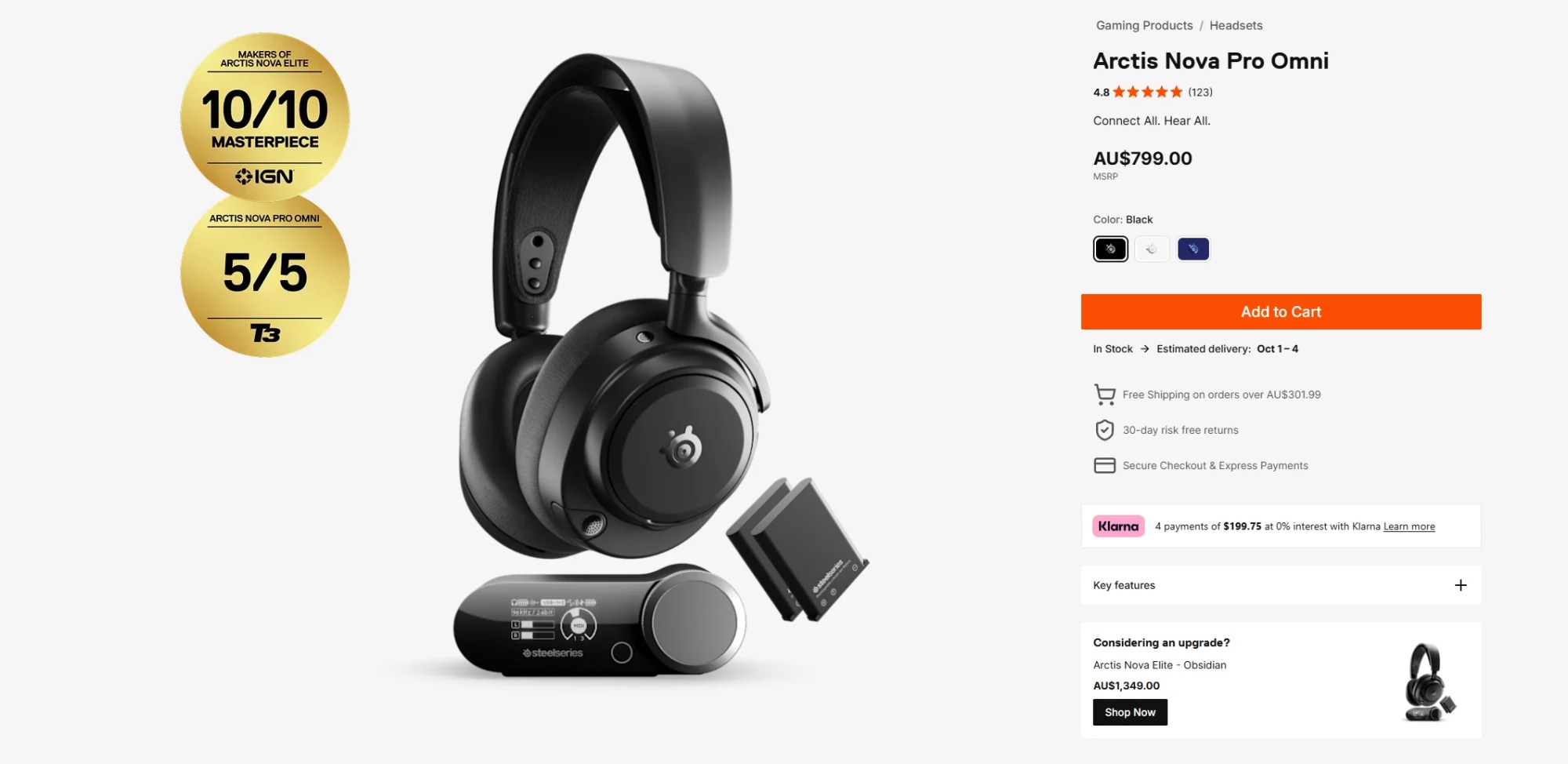
Astro’s A50X and related Logitech models are particularly good for multi-platform setups, with fast switching and mature integration between gaming systems.

The Stealth Pro 2 isn’t necessarily trying to destroy every one of those products in every category.
Instead, Turtle Beach has created something unusually balanced.
It sounds excellent, has very capable ANC, a strong microphone, comfortable breathable pads, substantial construction and absurdly better battery life than its predecessor.
That makes the $549 price much easier to understand.
Whether it makes the price easy to pay is another question entirely.
Who Is It For?
The Stealth Pro 2 makes the most sense for someone who games across several platforms and wants one genuinely high-end wireless headset rather than separate options for each device.
It’s particularly attractive if you use Bluetooth constantly alongside your gaming audio. Taking calls, listening to something from your phone or keeping another device connected without interrupting your primary gaming connection becomes part of the normal workflow.
Long-session gamers should also appreciate the reduced clamp force and breathable ear cushions.
If you play competitively, the strong imaging performance gives the headset genuine value without forcing you to use aggressively processed competitive presets.
I’d also consider it seriously if you hate permanently integrated batteries. Being able to replace the battery several years from now could extend the useful life of the headset considerably.
On the other hand, someone who games exclusively on one platform and doesn’t care about ANC, Bluetooth or transmitter switching could save a substantial amount of money.
And PC users obsessed with advanced EQ and extensive community sound profiles may still prefer competing platforms with more sophisticated software ecosystems.
Verdict
The Turtle Beach Stealth Pro 2 feels like the moment Turtle Beach stopped trying to make its best Turtle Beach headset and started trying to make one of the best premium gaming headsets full stop.
The hardware is easily the strongest part of the package.
Excellent construction, drastically improved battery life, strong comfort, impressive ANC, simultaneous Bluetooth and very capable sound give the Pro 2 almost everything I’d want from an expensive wireless gaming headset.
There are still some strange decisions lurking underneath it.
PC game/chat control shouldn’t be this awkward. The version differences need to be clearer. The EQ software could be more advanced, and firmware really shouldn’t be arriving after launch to correct noticeable ANC behaviour.
None of those issues completely undermine what Turtle Beach has built, but they do stop the Stealth Pro 2 from feeling completely finished.
Once the remaining software features catch up with the hardware, though, this could be a seriously difficult headset to beat.
For once, Turtle Beach has made a gaming headset where the expensive part isn’t just the price tag.

Zachary Skinner is the editor of TechDrivePlay.com, where tech, cars and adventure share the fast lane.
A former snowboarding pro and programmer, he brings both creative flair and technical know-how to his reviews. From high-performance cars to clever gadgets, he explores how innovation shapes the way we move, connect and live.


