

IMG 1271
Logitech G Astro A20 X Review: Great Sound, Brilliant Mic, Strange Bluetooth
Gaming headsets have developed a slight identity crisis. They are no longer allowed to simply produce decent sound and stop your teammates from asking why you sound like you’re calling from inside a dishwasher. Now they need wireless connectivity, Bluetooth, RGB lighting, software, EQ presets, multiple-console support and enough buttons to make the side of the earcup resemble a small aircraft cockpit.
The Logitech G Astro A20 X happily joins in.
What makes it interesting is that most of those extra features are actually useful. There is proper multi-platform connectivity, a genuinely impressive microphone, extensive EQ control and a clever PLAYSYNC system that makes switching between gaming systems remarkably painless. Logitech also manages to keep the headset under 300g despite packing all this in.
It isn’t perfect, though. The plastic construction feels noticeably less expensive than the price suggests, the fit is definitely biased towards larger heads, and Bluetooth performance during the supplied testing produced an annoying amount of distortion.
Then there is the sound.
Straight out of the box, I wouldn’t be rushing to tell everyone how wonderful it is. Give the A20 X a decent EQ profile, however, and it changes dramatically. This is one of those products where the hardware appears to be considerably better than the default tuning would have you believe.
And that microphone? It might be the best reason to buy the thing.
Logitech G Astro A20 X Review
The Astro A20 X is a feature-packed wireless gaming headset with excellent microphone quality, useful two-system PLAYSYNC switching and genuinely impressive sound once you give the EQ some attention. Its lightweight design is comfortable over long sessions, although the plasticky construction, firm ear cushions and questionable Bluetooth performance keep it from being quite as polished as it could be.
The Highlights
40mm PRO-G Drivers
Sound improves dramatically with a good EQ profile, delivering warm bass, strong detail and an immersive presentation that suits cinematic games particularly well.
PLAYSYNC Switching
The included station can stay connected to two gaming systems, allowing you to swap between them from the headset without constantly moving USB receivers.
Excellent 48kHz Mic
The boom microphone delivers unusually clear voice quality for a gaming headset and is one of the strongest reasons to consider the A20 X.
Lightweight at 290g
The plastic construction keeps weight down, while the fabric suspension headband does a good job of reducing pressure during longer gaming sessions.
What We Like
- Excellent microphone quality that easily beats many typical gaming headset mics.
- PLAYSYNC makes switching between two gaming systems genuinely convenient.
- Sound quality becomes very impressive once the EQ has been properly adjusted.
- Warm and punchy presentation works especially well with cinematic and story-driven games.
- Good imaging performance across both single-player and competitive games.
- Lightweight 290g construction helps minimise fatigue during longer sessions.
- Fabric suspension headband spreads pressure comfortably across the head.
- G HUB provides extensive parametric EQ and microphone customisation.
- Community presets make it easy to improve the sound without building an EQ from scratch.
- RGB lighting is relatively restrained and highly customisable.
What Could Be Better
- The factory sound tuning does not show the 40mm drivers anywhere near their best.
- Plastic-heavy construction feels cheaper than the asking price suggests.
- Ear cushion foam is firmer than ideal and can require repositioning during long sessions.
- The relatively large fit may not work particularly well for people with smaller heads.
- Bluetooth cannot operate simultaneously alongside the main wireless connection.
- Bluetooth produced audible distortion when listening from a phone during testing.
- Footsteps can occasionally become buried when FPS soundscapes get particularly busy.
- The PLAYSYNC station lights continue blinking after the headset is switched off.
- The price is harder to justify if you only ever game on a single platform.
Our Verdict
The Astro A20 X gets the important parts right. The microphone is excellent, PLAYSYNC makes moving between two gaming systems noticeably easier, and the lightweight construction works well for long sessions. Sound quality is also genuinely impressive once you replace the underwhelming default tuning with a better EQ profile. There are still a few rough edges, including firm ear pads, a noticeably plastic feel and the Bluetooth distortion experienced during testing. Competitive FPS players may also find subtle footsteps occasionally getting lost when things become chaotic. For gamers who regularly jump between platforms, though, the combination of strong audio, an unusually good mic and genuinely useful switching makes the A20 X easy to recommend.
Design / First Impressions
The Astro A20 X isn’t trying to convince you that it has been machined from a single piece of aerospace aluminium. It is plastic. Lots of plastic.
That has an obvious downside: it doesn’t immediately feel like a particularly expensive headset. Pick it up and there isn’t the density or reassuring material quality you might expect from something with an Australian RRP of $349.95. I don’t think it feels fragile, but nobody is going to mistake it for jewellery.
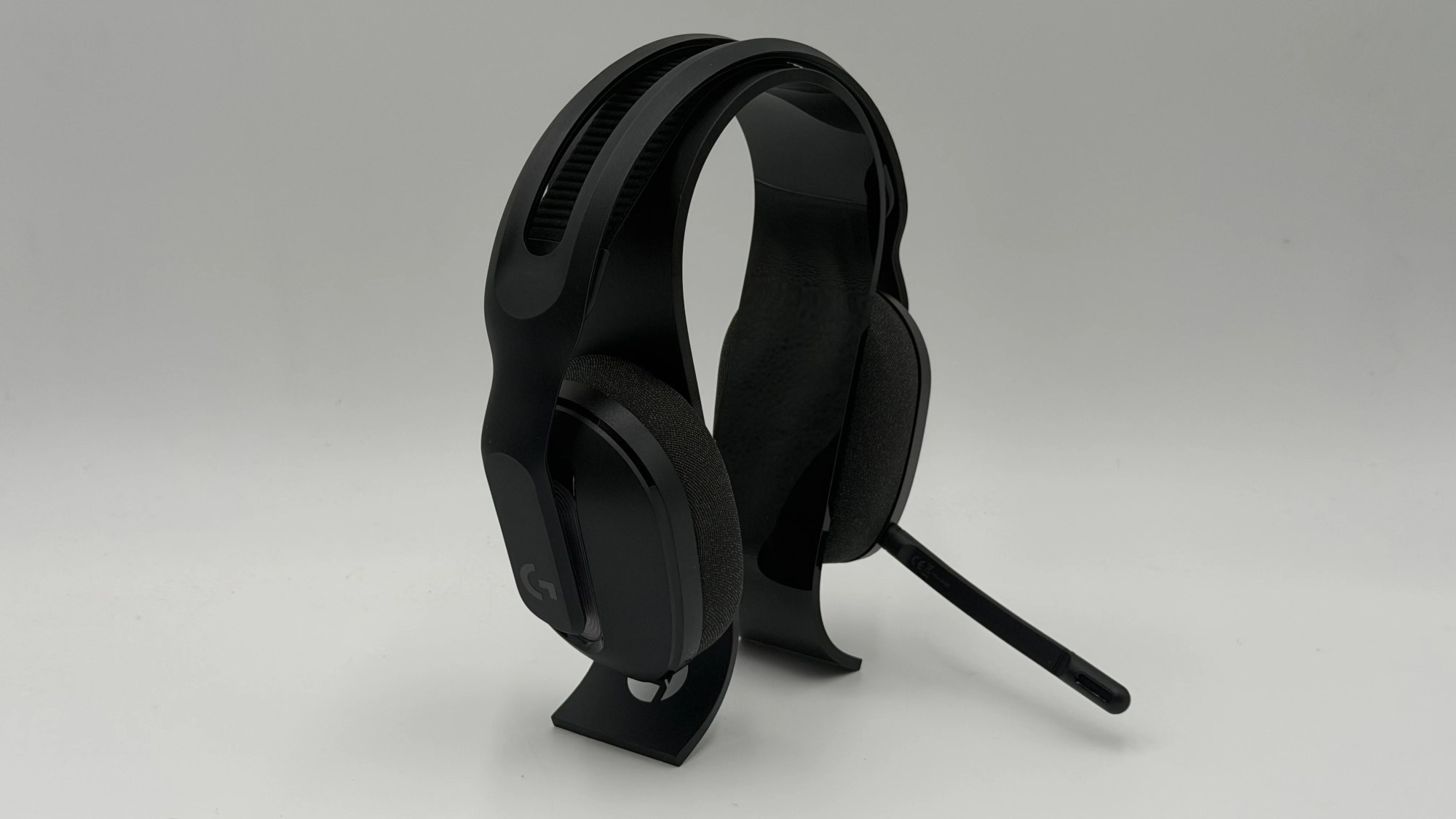
There is a benefit to this approach, though.
The A20 X weighs just 290g, and that matters far more after three hours of gaming than some decorative piece of metal around the hinge. Logitech combines the low weight with a suspended fabric headband that spreads pressure across the top of your head rather than concentrating it in one spot.
I prefer this style of headband to the more conventional padded bands used by plenty of rivals. The headset almost hangs from the suspension strap, which reduces the feeling of something clamping itself onto your skull for the evening.
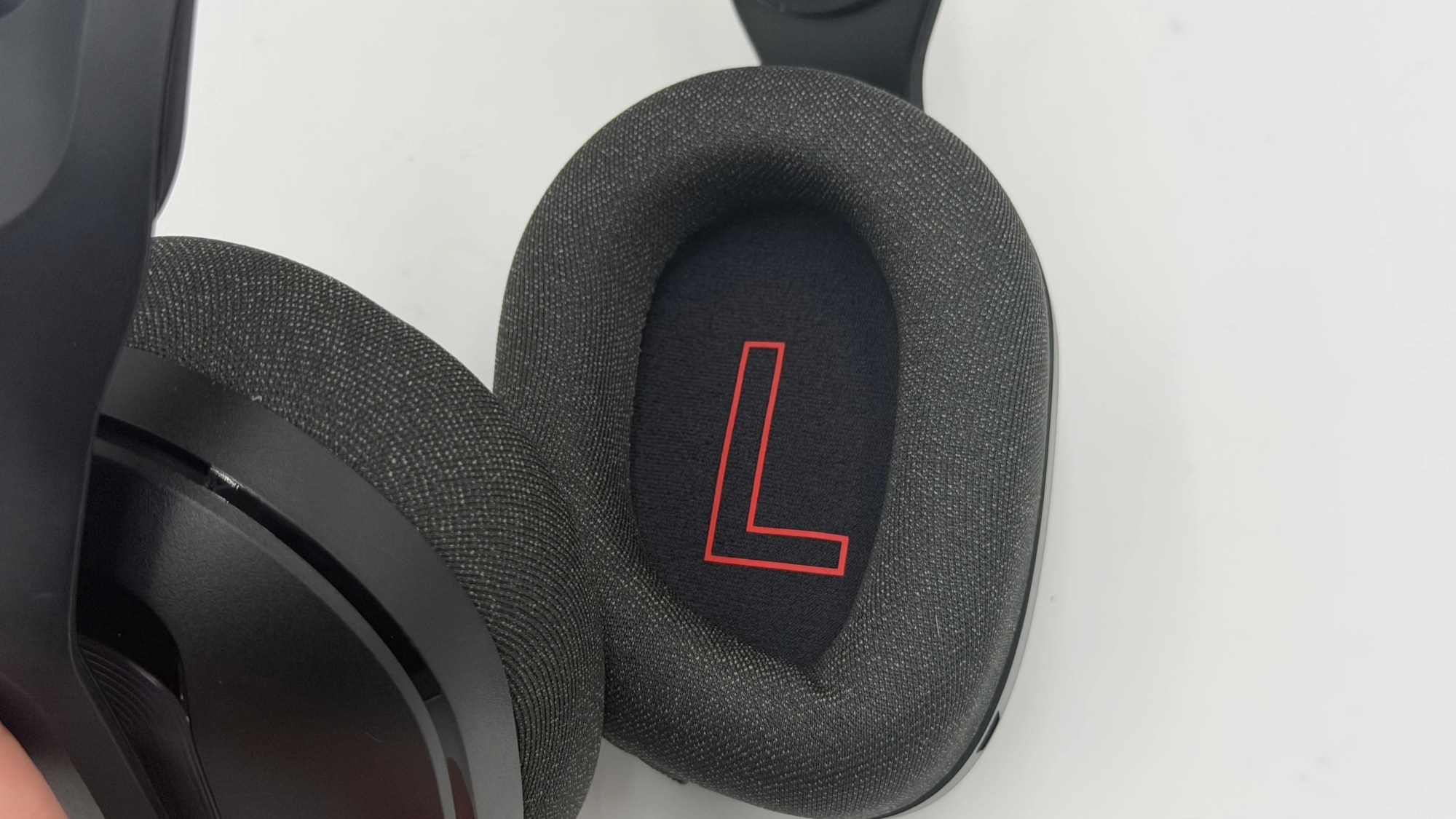
The fabric-covered ear pads continue that lightweight theme. They aren’t particularly luxurious, but they breathe well and don’t completely block out the outside world. Depending on how you play, that can either be useful or slightly annoying. Personally, I’d rather hear the doorbell than spend ten minutes wondering why the delivery driver has taken my dinner back to the restaurant.
The bigger problem is the foam.
Based on the testing supplied, the ear cushions are firmer than they really need to be. They aren’t uncomfortable enough to ruin the headset, but they can create enough pressure that repositioning the earcups during longer gaming sessions becomes tempting.
Fit is another consideration. This is a large headset. The testing was conducted with the headband and earcups essentially at their smallest adjustment, and even then the fit was only just right. Anyone with a particularly small head should try one before buying rather than discovering they’ve purchased an expensive pair of shoulder-mounted speakers.

There is RGB lighting on the earcups, because apparently gaming hardware becomes legally invalid if it cannot glow. Fortunately, the implementation is reasonably restrained. Logitech uses eight LIGHTSYNC lighting zones with up to 16.8 million colours, all configurable through G HUB.
I normally consider RGB on a headset slightly pointless because the one person who cannot see it is the person wearing it, but at least it looks good sitting on a desk.
Key Features / Specs
The A20 X becomes much more interesting once you get past the plastic shell.
The main specifications include:
- 40mm PRO-G drivers
- 20Hz to 20kHz headphone frequency response
- 48kHz boom microphone
- 290g weight
- LIGHTSPEED wireless
- Bluetooth 5.3
- USB wired connectivity
- Two-system PLAYSYNC base station
- Eight-zone LIGHTSYNC RGB
- Up to 90 hours of claimed battery life with lighting disabled
- Up to 40 hours with default lighting
- Support for PC, PS5, Xbox Series X|S and Nintendo Switch
- G HUB and mobile app customisation
The headline feature is PLAYSYNC.
Instead of providing a normal USB wireless dongle, Logitech includes a small base station that can remain connected to two gaming systems. Press the PLAYSYNC button on the headset and you can jump between them without unplugging and reconnecting the headset every time. Logitech officially supports combinations involving Xbox, PS5, PC and Nintendo Switch.
That sounds like a small thing until you regularly move between platforms.
If your evening goes from PC to PS5, for example, you don’t need to crawl behind anything, steal a USB port from another device or maintain a tiny collection of dongles that all look identical. One button and you’re across.
The base will also automatically move to the remaining connected source if the other is unplugged, which is exactly the sort of feature nobody puts on the front of the box but you end up appreciating more than the RGB.
Bluetooth is also included, although it cannot operate simultaneously with the main wireless connection. That means you can’t have game audio running while also mixing audio from your phone in the background.
I can live with that.
More interesting is the software support. G HUB gives you extensive control over sound, microphone processing and lighting, while community-created profiles can be downloaded rather than forcing everyone to become an amateur acoustics engineer. Logitech also provides Blue VO!CE processing for the microphone.
That flexibility ends up being particularly important because the A20 X benefits enormously from EQ adjustment.
Performance
This is where the Astro starts making a much stronger case for itself.
The 40mm PRO-G drivers are capable of producing genuinely enjoyable audio, but the default tuning does them few favours. In the supplied testing, the headset sounded strange out of the box and improved significantly after applying a custom parametric EQ through G HUB.
That distinction matters.
If you’re the sort of person who wants to connect a headset and never look at the software again, the A20 X isn’t showing you its best side. I think that’s a shame. Good hardware shouldn’t require the owner to excavate through menus before it starts sounding convincing.
Once properly tuned, however, the results are much more impressive.
Music takes on a warm, fairly bass-rich character without becoming a muddy mess. There is enough detail from the 40mm drivers to pick apart smaller elements within songs, while the upper frequencies avoid becoming aggressively sharp. Logitech officially rates the drivers at 20Hz to 20kHz.
I wouldn’t buy a gaming headset primarily for critical music listening, but the A20 X seems perfectly happy doing double duty.
Gaming is where the tuning really starts to work.
In story-heavy games such as Spider-man, the headset performs particularly well. Dialogue remains natural, environmental effects have plenty of presence and music can sit underneath everything without turning the entire mix into audio soup. Combat has some proper weight behind it as well.
That richer sound works nicely with cinematic games such as Spider-Man 2. The A20 X appears more interested in making a game feel large and dramatic than dissecting every sound with laboratory precision, and I don’t think that’s necessarily a criticism.
Explosions should explode.
For competitive FPS gaming, however, there is a compromise.
Imaging performance during the testing was good enough to identify where sounds were coming from, including in Call of Duty. The problem appeared when the soundscape became busy. Footsteps could occasionally get buried beneath gunfire, explosions and everything else happening at once.
That means I wouldn’t put the A20 X at the very top of my list for someone whose gaming life consists entirely of ranked competitive shooters.
For everyone else, the trade-off may actually be worth it. Gunfire has impact, explosions have proper low-end weight and environmental destruction sounds satisfyingly violent. It is immersive rather than ruthlessly analytical.
And then we get to the microphone.
It is excellent.
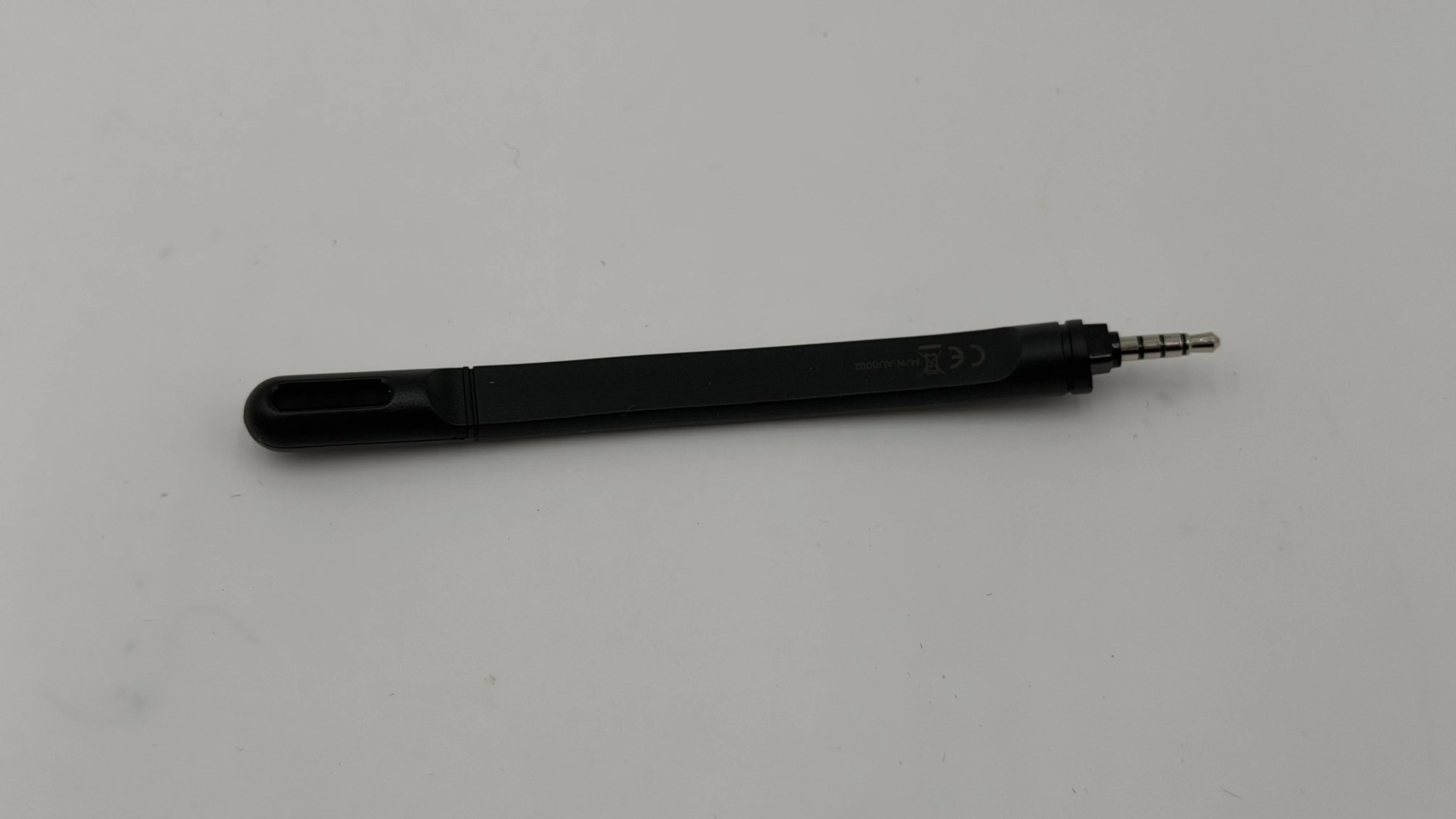
Logitech uses a full-bandwidth 48kHz boom mic derived from technology used further up the Astro range, with Blue VO!CE processing available through G HUB. The supplied review material was recorded entirely through the headset microphone, and the clarity is unusually good for an integrated gaming mic.
That’s a major advantage if you spend a lot of time in Discord, multiplayer chat or even casual streaming.
There are still better dedicated USB microphones, obviously. Nobody should throw their studio mic into a river because Astro has discovered microphones.
But for something attached to the side of your headphones, it is seriously impressive.
What It’s Like to Use
The best part about living with the A20 X appears to be how little ceremony is involved once everything is configured.

Connect two systems to the PLAYSYNC station and jumping between them becomes genuinely easy. Press the button on the headset and you’re done. If one device disappears from the equation, the headset can automatically move across to the other connected source.
It’s one of those conveniences that sounds boring until you go back to a headset without it.
The station itself does have one irritating habit. During testing, its lights continued blinking after the headset had been switched off, with no obvious option available to disable them.
That probably won’t bother someone whose gaming setup already resembles Times Square at midnight.
Put the base station in a bedroom, however, and two tiny flashing LEDs suddenly become the most important objects in the universe when you’re trying to sleep.
The physical controls are easy enough to reach, including the dedicated PLAYSYNC control. MixAmp functionality also lets you change the balance between game and chat audio on supported platforms without opening software.
Comfort is mostly good rather than spectacular.
The lightweight construction and suspension strap do a lot of the work. At 290g, there isn’t much mass constantly pulling downward, and the fabric pads avoid the heat build-up that can come with thick leatherette cushions.
I’d still like softer foam in those pads.
Bluetooth was the largest usability disappointment in the supplied testing. Music played from a phone produced audible distortion, while connecting that same phone to the PLAYSYNC station via USB-C removed the problem.
It’s difficult to say whether that behaviour is representative of every A20 X or simply an issue with the tested unit, so I wouldn’t declare Bluetooth fundamentally broken. But it is absolutely something I would check during the return period.
It also rather defeats the point of Bluetooth when plugging in a cable is the solution.
G HUB itself plays a surprisingly important role in the experience. EQ adjustment transforms the headset’s audio, and the ability to browse community-created sound and microphone presets means you don’t necessarily need to understand frequency graphs to improve it.
I appreciate that approach.
Give enthusiasts a parametric EQ to spend four hours adjusting 2.7kHz by half a decibel if that brings them joy, but let everyone else press Download.
What I Liked
The microphone is the obvious standout.
Integrated headset microphones are often included because a gaming headset is expected to have one, not because anyone appears particularly interested in making it sound good. The A20 X feels different. Voice clarity is strong enough that I wouldn’t feel an immediate need to add a desktop microphone unless streaming or content creation became a priority.
PLAYSYNC is the other feature I would actually miss.
Multi-platform compatibility isn’t unusual anymore, but having two systems permanently connected and switching between them directly from the headset is considerably better than moving one wireless receiver around your setup. Logitech clearly designed the A20 X for people who actually own more than one gaming platform rather than simply putting four console logos on the box.
The low weight also deserves credit. Plastic construction isn’t glamorous, but 290g is much easier to live with than a beautifully engineered headset that starts feeling like medieval punishment after two hours.
And while the need for EQ is annoying, I like just how much control Logitech provides once you open G HUB. Community presets are particularly useful because they give owners an easy path to improving both headphone and microphone tuning without starting completely from scratch.
What Could Be Better
First, the A20 X should sound better before anyone touches the EQ.
There is nothing wrong with giving enthusiasts extensive tuning options, but software adjustment should improve an already good headset rather than rescue one from questionable factory tuning. The drivers are clearly capable of much more than the default profile suggests.
The ear pads could also use another pass.
Fabric is a good choice for temperature management, but the foam itself feels too firm based on the supplied testing. A little extra softness would make the headset easier to forget during long sessions.

Then there’s the fit.
If you’ve got a smaller head, this may simply be too large. That’s not a defect in the same way as dodgy Bluetooth, but it is a genuine ergonomic limitation and one worth checking before buying.
The Bluetooth behaviour is harder to forgive.
Distortion shouldn’t be happening on a headset this expensive. Again, the problem may have been isolated to the supplied test unit, but Bluetooth is part of the feature set you’re paying for. Having to connect the phone by USB-C to fix wireless audio is a bit like buying an electric toothbrush and discovering it works best when operated manually.
Finally, the PLAYSYNC station needs better control over its lighting behaviour. A setting to completely disable the status lights when the headset is switched off feels fairly obvious.
Price and Competition
The A20 X launched in the United States at US$179.99, while Logitech currently lists it in Australia at AU$349.95. JB Hi-Fi was also listing the black version at AU$349 when checked.

That Australian price puts it in an interesting position.
Logitech’s own G522 LIGHTSPEED currently sits at AU$299.95. The two are closely related in concept, so the A20 X makes most sense when you actually need its broader console-focused connectivity and PLAYSYNC base rather than simply wanting a wireless PC headset.
That extra AU$50 isn’t ridiculous if you’re constantly moving between systems.
If you aren’t, I’d question why you’re paying it.
Moving up through Astro’s range becomes considerably more painful for the wallet. The Astro A50 Gen 5 currently costs AU$599.95 and expands PLAYSYNC to three systems while adding PRO-G graphene drivers and a full base station.
Then there is the A50 X at AU$749.95, which adds three-system switching, graphene drivers and HDMI 2.1 passthrough.
At that point we’re discussing a gaming headset that costs more than some perfectly respectable televisions, so perspective becomes useful.
The A20 X therefore occupies a sensible middle ground within Logitech’s own range. It gives you much of the clever multi-platform functionality without wandering into A50 X pricing.
My hesitation is that AU$349.95 still isn’t cheap enough to excuse everything.
The plastic construction is acceptable because it contributes to the low weight. The average factory EQ is less defensible. Bluetooth distortion, should it affect retail units more broadly, would be a much bigger concern.
At a discounted price closer to AU$300, I’d find the equation significantly easier.
Who Is It For?
The Astro A20 X makes the most sense for someone with multiple gaming platforms.
If you’ve got a PC and PS5, an Xbox and PC, or some similarly crowded arrangement under your television, PLAYSYNC is useful enough to become one of the main reasons to buy the headset. You connect two systems, leave them connected and jump between them without having to perform USB musical chairs every evening.
It is also a strong option for players who care about microphone quality.
If a large part of your gaming involves Discord, parties, co-op sessions or multiplayer communication, the 48kHz boom mic is one of the better integrated solutions available at this level.
Single-player gamers should enjoy the sound as well, particularly once the EQ has been adjusted. The warmer, punchier presentation works nicely for games where atmosphere and spectacle matter more than extracting the exact location of someone’s left boot three rooms away.
Dedicated competitive FPS players are the group I’d be more cautious with. Imaging is good, but the supplied testing suggests subtle cues such as footsteps can occasionally lose the argument when the rest of the soundscape becomes chaotic.
People with smaller heads should also try it on before buying.
And if your only gaming machine is a PC, I’d seriously consider whether the cheaper G522 gives you everything you actually need.
Verdict
The Astro A20 X is frustratingly close to being an easy recommendation.
The underlying audio hardware is very capable. Once properly EQ’d, the 40mm drivers produce rich, detailed sound that works particularly well for cinematic games, music and general gaming. The microphone is superb for an integrated headset solution, the 290g construction keeps fatigue down, and PLAYSYNC makes owning several gaming systems noticeably less annoying.
But there are some strangely unnecessary rough edges.
The default tuning undersells the drivers. The ear pads could be softer. Smaller heads may struggle with the fit, and the Bluetooth distortion encountered during testing is the sort of problem that deserves immediate attention on something costing AU$349.95.
I also don’t think the plastic construction is quite as offensive as it initially appears. Yes, it feels cheaper than the price suggests, but I’ll happily trade a bit of aluminium theatre for a headset that doesn’t feel like it’s gradually compressing my spine.
For multi-platform gamers in particular, the A20 X gets the important stuff right. PLAYSYNC is genuinely useful rather than marketing decoration, the microphone is far better than it has any business being, and there’s enough audio potential here that a good EQ turns it into a very enjoyable headset.
Just don’t judge it immediately after taking it out of the box.
Apparently even the Astro A20 X needs a software update to its personality.

Zachary Skinner is the editor of TechDrivePlay.com, where tech, cars and adventure share the fast lane.
A former snowboarding pro and programmer, he brings both creative flair and technical know-how to his reviews. From high-performance cars to clever gadgets, he explores how innovation shapes the way we move, connect and live.


